

Why Your Backwards Crossovers Have No Speed (Your Inside Leg Is Doing Nothing)

Why Your Backwards Crossovers Have No Speed (Your Inside Leg Is Doing Nothing)
You cross over, you turn, and you're still getting beat wide. Most players only push with one leg. Here's how to get the other one working.
SHOP NOWKey takeaways
The inside leg pushes as it slides under you. The outside leg pushes as it crosses over.
Backwards C-cuts and a balanced stance: weight over the knees, on the balls of the feet.
Start wider if you need to. Tighten the radius once the rhythm is clean.
Short, quick crossovers are what you'll use most, especially to go from backwards to forwards.
The skill that separates skating backwards from defending
Plenty of players can skate backwards. Far fewer can defend, turn and build speed while still facing the play. Backwards crossovers are the difference.
When you skate backwards around a turn, each leg has its own job. Most players who struggle with backwards crossovers are only doing one of them.
The leg closest to the middle of the turn reaches in, gets pulled underneath your body, and rolls from its inside edge to its outside edge as it pushes.
This leg crosses over in front of the inside leg and pushes as well, much like a backwards C-cut.
The real trick is getting both legs to work together.
If your outside leg crosses over while your inside leg just goes along for the ride, you'll turn, but you won't gain any speed. This guide follows Coach Jeremy Rupke's lesson from How To Hockey: the building blocks, the full move on a faceoff circle, then the quick version you'll use in games.
1. The building blocks: don't skip these
Before you try crossovers at speed, get these four pieces solid. Each one feeds directly into the full move.
The stance matters most. You want to be sitting back slightly, shoulders straight up over your knees, knees bent and most of your weight on the balls of your feet. Not too far forward, not too far back.
Leaning on your stick is fine when you're starting out. As you get comfortable, take the weight off and center yourself over your knees.

Stick down for stability. Step one foot over the other, stop, bring it back. Both directions.
Sit back slightly, shoulders over knees, weight on the balls of your feet.
Push one foot out and around in a big "C", then the other. That's all skating backwards is. Then speed them up.
Two C-cuts for speed, one crossover, stop. Reset and repeat, then chain more in a row.
Rhythm cue: C-cut, C-cut, cross. Stop. Repeat. Speed comes later.
2. The full move on a faceoff circle, step by step
The turn makes the crossover harder, and that's the point. It teaches your edges what to do.
Hockey stance, skating backwards close to the line. If a tight turn feels uncomfortable, go wider.
C-cuts with the inside foot. Forget the outside foot for now.
Instead of finishing out to the side, pull the inside foot under your body. Inside edge to outside edge. Knees bent the whole time.
It's been mostly idle. Get it working with short C-cut style pushes: push, push, push.
Sweep the inside leg under and push, cross the outside leg over and push. Keep going around.
Inside leg comes under while the outside crosses over. Each push starts mid-blade and finishes through the toe.

Inside leg under. Outside leg over. Push, push.
That's the slow-motion cue. If you only remember one thing on the circle, make it that both legs finish a push before the next one starts.
Every edge change starts inside the boot
Look at what the circle drill asks of your feet: roll from inside edge to outside edge, start each push mid-blade, finish through the toe. All of it assumes your foot and your skate move as one.
In a thin cotton sock, the foot slides a few millimetres on every load. On a crossover, where the pressure shifts sideways and then forward in one motion, that slip shows up as an edge that bites a beat late. That's the gap RocketGrip Hockey Grip Socks are designed to close.

RocketGrip Custom Hockey Grip Socks
Sizes XS–XL (EU 30–47) · custom team logo, initials or number on the calf panel
It won't do your crossovers for you. It just stops the push you've built from leaking before it reaches the ice.
VIEW SOCKS3. Wide power crossovers vs. quick crossovers
You need both. Power skating clinics will tell you to reach out wide and pull right under, and it's worth learning: the more ice you grab and get underneath you, the more speed you build.
That power comes from the outside edge biting as the inside leg drives under you. In a game, though, you usually need quick feet more than long strides.

Wide power crossovers
Quick crossovers
Quick crossovers are usually a transition move. Rupke calls it "one, two, and go": two quick crossovers while skating backwards, then turn and skate forwards.

4. Where you'll use it: supporting the breakout
Defensemen use backwards crossovers constantly. But the example you'll see every shift belongs to forwards.
Your D has the puck and is coming around the net. You want to give them an easy outlet. So you swing in, turn, and keep your body facing the play. A few quick backwards crossovers to pick up speed, take the pass, turn up ice. Same move on either side.
You never lose sight of the puck, and you're already moving when the pass arrives.
Common mistakes (and the fix)
Go back to inside-leg-only laps until the push under your body feels automatic.
Keep the knees bent. Without the bend, the legs have no room to cross or push.
Shoulders over knees, weight on the balls of your feet.
Fine at first. Gradually take the weight off until you're balanced on your own.
Use a wider circle. Clean rhythm first, then tighten the radius.
Train both ways from day one, starting with the standing-still drill.
A simple practice progression
Got a stretch of open ice? Work through it in order. Each stage depends on the last.
Stick down, both directions.
Length of the ice, taking weight off the stick as you go.
In a straight line, stop, repeat.
Around a circle, focused on pushing under your body.
Both directions, wide at first.
Finish with "one, two, and go" into forward skating.
Pair this with our guide on how to skate faster for the forward side of the transition.
Your legs do the work. Your top hand keeps the stick steady.
Backwards skating is all legs, but your hands are busy the whole time. While you're learning, you lean on the stick for balance. Once you're moving, the stick stays out in front, often in just your top hand when you're defending.
Through every crossover, turn and transition, that top hand has to keep its hold on the knob. A grip won't do your crossovers for you. It's just what your hand holds onto for the whole shift.

RocketGrip Hockey Grip Starter Pack
Rubber, Fabric and Hole (perforated) · optional tackifier
Frequently asked questions
What is the difference between forward and backward crossovers?
In both, the outside leg crosses over the inside leg on a turn. In a backwards crossover you're facing away from the direction you're traveling. The inside leg pushes as it's pulled underneath your body, moving from its inside edge to its outside edge, while the outside leg crosses over in front and pushes.
Why am I not getting any speed from my backwards crossovers?
Usually it's because only the outside leg is pushing. The inside leg needs to come under your body and push too, so practice inside-leg-only laps on a circle. For more speed, reach wider so you grab more ice before pulling it under you.
Should I learn backwards crossovers in a straight line or on a circle?
Both, in that order. Start with C-cuts and single crossovers in a straight line to get the rhythm. Then move to a faceoff circle, starting wide and tightening up as you improve.
Is it OK to lean on my stick while learning to skate backwards?
Yes. Putting weight on your stick is a good way to feel the C-cut and crossover motion when you're starting out. As you improve, take the weight off and center yourself over your knees on the balls of your feet.
How do I use backwards crossovers to turn and skate forward?
Do two or three quick crossovers while skating backwards to build speed, then turn and go forward. Short, quick steps with most of the power coming from the outside leg work best for this transition.
Do forwards need backwards crossovers, or just defensemen?
Both. Defensemen rely on them to skate backwards and keep up with the play. Forwards use quick backwards crossovers to swing in, stay facing the puck and pick up speed for a breakout pass.
Watch the full lesson
Coach Jeremy Rupke and Ken from How To Hockey break it down on the ice.
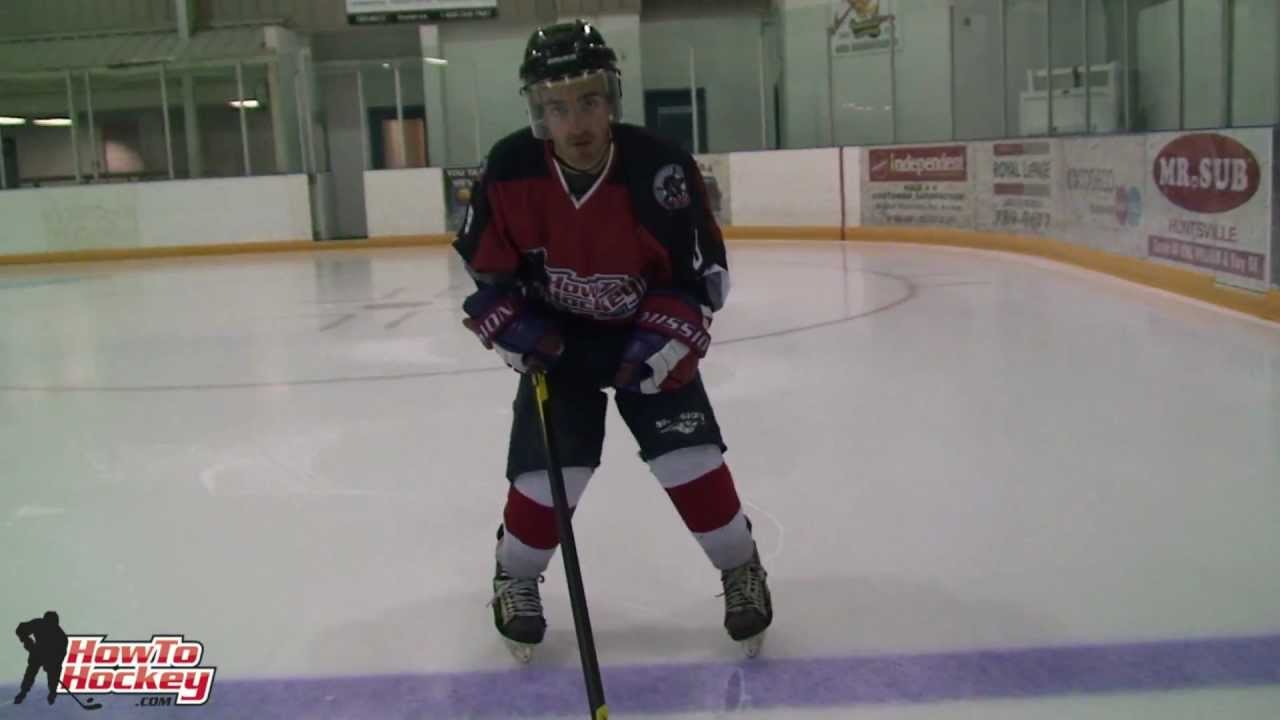
Video won't play? Watch on YouTube →
The short version
Inside leg under, outside leg over, and both of them pushing. Build the foundation with C-cuts, learn the full move on the circle, then sharpen the quick version until "one, two, and go" happens without thinking.
And while your legs build the speed, make sure your top hand has something consistent to hold onto.
FIND YOUR GRIP →- Rubber, Fabric and Hole grips · optional tackifier
- Heat-shrink fit · no glue, no tape residue
- 60-day money-back guarantee
Coaching guidance in this article is drawn from a backwards crossover lesson by Jeremy Rupke and Ken of How To Hockey. This article is general coaching and equipment information. RocketGrip hockey grips are a stick accessory designed to give your top hand a consistent hold on the knob; they won't replace skating technique.